
In the world of industrial machinery, couplings play a crucial role in ensuring smooth and efficient power transmission between rotating shafts. Whether it is heavy-duty manufacturing equipment or delicate mechanical systems, the right coupling type ensures durability, safety, and reliability. Among the wide variety of coupling designs available, flange couplings and fluid couplings are two of the most commonly used types due to their versatile applications and performance benefits.
This blog explores the functions, advantages, and applications of couplings, with a special focus on flange couplings and fluid couplings.
What Are Couplings?
Couplings are mechanical devices designed to connect two shafts together while enabling torque transmission. They are vital for maintaining proper alignment and reducing wear and tear in machinery. Couplings are broadly classified into two categories:
Rigid Couplings – Provide a solid connection with minimal flexibility, used in applications where precise alignment is required.
Flexible Couplings – Allow for slight misalignments, vibration damping, and smooth torque transmission, ideal for dynamic systems.
Couplings enhance machinery performance by compensating for shaft misalignment, absorbing shocks, and reducing vibration.
What Are Flange Couplings?
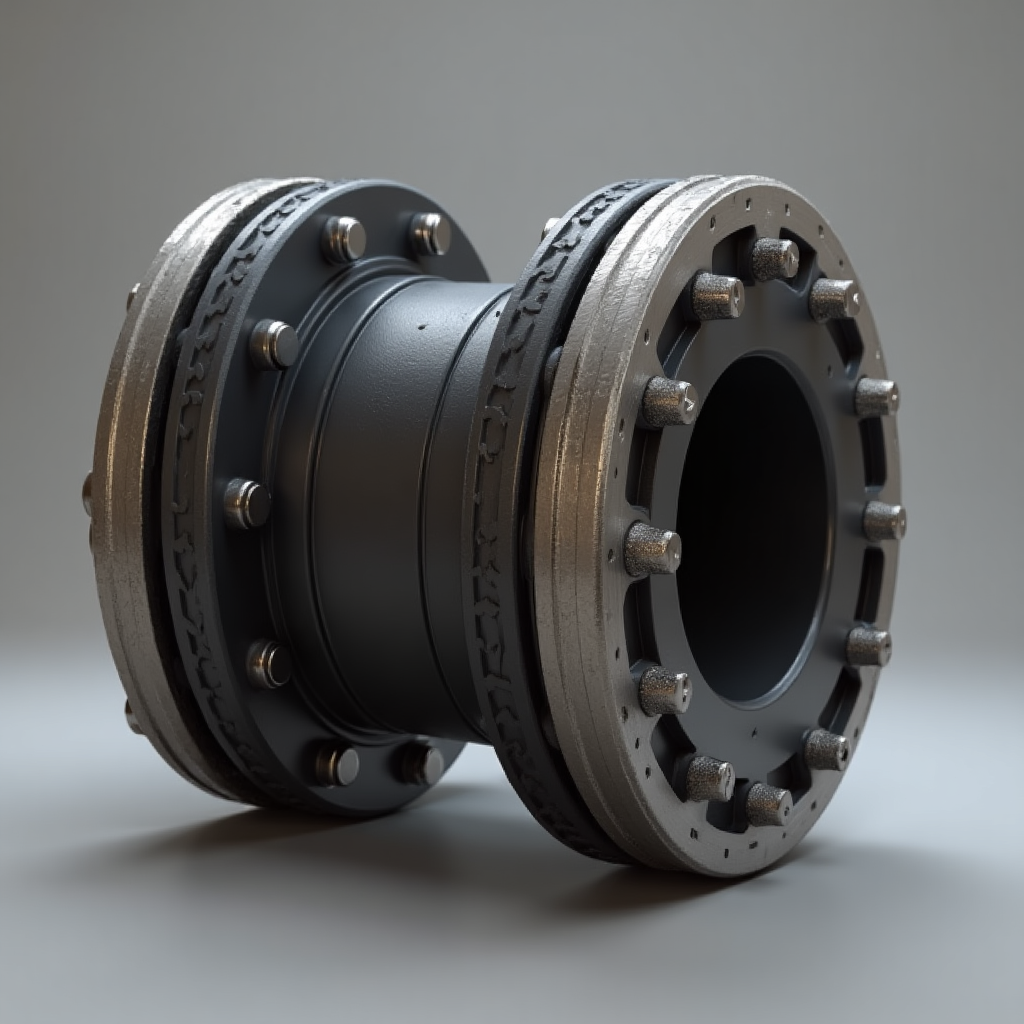
Flange couplings are a type of rigid coupling where two separate flanges are bolted together to connect shafts. These couplings are widely used in industries like marine, automotive, and power generation.
Key Features of Flange Couplings:
Rigid and Strong: Designed to handle high torque transmission without slipping.
Easy Assembly: Consists of flanges bolted together, allowing for easy installation.
Alignment Requirement: Requires precise shaft alignment for efficient operation.
Durability: Constructed from high-strength materials like cast iron, steel, or stainless steel.
Flange couplings are preferred where shaft alignment is accurate, and maximum torque transfer is necessary.
Applications of Flange Couplings
Heavy machinery and industrial drives.
Marine applications, including ship propulsion systems.
Automotive industries for connecting engines and gearboxes.
Pumps, compressors, and large fans requiring secure power transmission.
Their ability to withstand high loads and vibrations makes them a go-to choice for robust industrial applications.
What Are Fluid Couplings?
Fluid couplings are hydrodynamic devices that use fluid to transmit power between shafts. Unlike rigid couplings, they provide a smooth start-up and minimize mechanical shock, which is especially useful for heavy-load equipment.
Key Features of Fluid Couplings:
Smooth Torque Transmission: Reduces shock loads during machine start-up.
Overload Protection: Prevents damage to machinery by slipping under excessive load.
Vibration Reduction: Fluid dynamics help in damping vibrations and noise.
Maintenance-Friendly: No direct mechanical contact, reducing wear and tear.
Applications of Fluid Couplings
Fluid couplings are extensively used in industries such as:
Mining and material handling for conveyor systems.
Automotive for smooth power transfer in vehicles.
Marine for propeller-driven machinery.
Power plants for pumps, compressors, and fans.
Their ability to handle varying loads and provide gradual acceleration makes them a preferred choice in industries requiring high-performance torque management.
Benefits of Using the Right Couplings
Enhanced Performance: Proper coupling selection ensures efficient energy transfer.
Reduced Downtime: High-quality couplings minimize the need for frequent maintenance.
Shock Absorption: Flexible and fluid couplings protect machinery from sudden load spikes.
Longevity: Prevents premature failure of connected equipment by reducing stress and vibrations.
Flange Couplings vs. Fluid Couplings
While flange couplings are known for their rigidity and high torque-handling capability, fluid couplings excel in scenarios where smooth torque transfer and overload protection are critical.
Flange Couplings: Ideal for precision alignment and static load transfer.
Fluid Couplings: Best suited for dynamic applications that require flexibility and gradual acceleration.
Why Choose High-Quality Couplings?
Investing in premium couplings, whether flange couplings or fluid couplings, ensures better operational efficiency and longer equipment lifespan. High-quality couplings are designed to handle challenging environments, withstand wear, and provide consistent performance.
Manufacturers with proven expertise focus on precision engineering, superior materials, and innovative designs that cater to a wide range of industries.
Conclusion
In industrial applications, the right coupling can be the difference between smooth operations and costly downtimes. Both flange couplings and fluid couplings have distinct advantages, making them indispensable in specific industries. To understand the in-depth applications of fluid couplings and why they are critical for modern machinery, explore fluid couplings applications.







Write a comment ...